What is RoHS and How it Relates to Your Product
Electrical Engineering · October 2018 · Updated July 2026
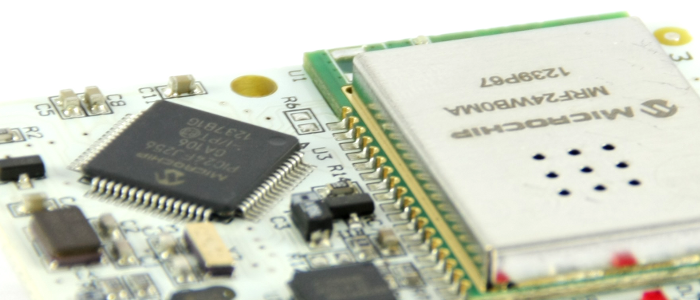
If you're bringing an electronic product to market, RoHS compliance isn't optional — it's a legal requirement for selling in the European Union and, increasingly, a baseline expectation everywhere else. Here's what the directive covers and how it shapes the way your product is designed and manufactured.
What is RoHS?
The Restriction of Hazardous Substances (RoHS) is a European Union directive that took effect in 2006 and restricts the use of specific hazardous materials in electrical and electronic equipment. The original directive restricts:
- Lead (Pb)
- Mercury (Hg)
- Cadmium (Cd)
- Hexavalent chromium (Cr6+)
- Polybrominated biphenyls (PBB)
- Polybrominated diphenyl ethers (PBDE)
Since this article was first written, the list has grown. The RoHS 3 amendment (Directive 2015/863) added four phthalates — DEHP, BBP, DBP, and DIBP, plasticizers commonly found in cable insulation — bringing the total to ten restricted substances as of July 2019. Each substance is limited to 0.1% by weight per homogeneous material (0.01% for cadmium). "Homogeneous material" is the key phrase: the limit applies to every individual material in the assembly — each solder joint, wire coating, and plating layer — not to the product as a whole.
Does RoHS apply to your product?
If your product runs on electricity or electromagnetic fields and you intend to sell it in the EU, the answer is almost certainly yes. RoHS 2 (Directive 2011/65/EU) broadened the scope to nearly all electrical and electronic equipment and made RoHS part of CE marking — meaning you declare compliance in the same technical documentation that backs your CE mark. Many other jurisdictions have adopted similar rules, including China, and several US states restrict the same substances. Even if you only sell domestically, large retailers and OEM customers routinely require RoHS compliance as a condition of doing business.
What RoHS means for your design
Compliance is far cheaper to design in than to retrofit. In practice it affects:
- Component selection. Choosing parts with RoHS-compliant finishes and documented certificates of compliance from the start, so the bill of materials is clean before the first prototype.
- Solder and assembly. Lead-free solder alloys run at higher reflow temperatures, which influences PCB laminate choice and component ratings.
- Mechanical parts. Platings, coatings, pigments, and cable jacketing all fall under the homogeneous-material rule, so the mechanical BOM needs the same scrutiny as the electrical one.
- Documentation. A compliant product needs a paper trail — supplier declarations and material data collected and kept with the technical file, so you can prove compliance if a market-surveillance authority asks.
How Launching Ideas approaches RoHS
When at all possible, Launching Ideas designs with and uses safe materials in prototypes, and materials from compliant manufacturers in fabricated items. Our electrical engineering team selects RoHS-compliant components during schematic capture and PCB layout, and we carry the requirement through to the mechanical design — enclosures, fasteners, and finishes included — so compliance is baked into the product rather than bolted on before launch.
Planning an electronic product and not sure what compliance will require? Contact us for a free quote — we'll help you build it right the first time.